LawpatraLawpatra.ai
RJS 2026AI tutor available 24/7

Master Rajasthan Judiciary 2026 with India’s Smartest AI Law Coach

Move beyond passive Bare Act reading. Join 1227+ aspirants using smart AI analytics to pinpoint weak areas, master Rajasthan local laws, and build bulletproof accuracy for Prelims & Mains.

No credit card • Free access forever

Test series on the goGoogle Play

1227+

Students Enrolled

22

Subjects

100

Topics

128+

Practice Tests

0+

Mock Tests

3K+

Questions

Important details

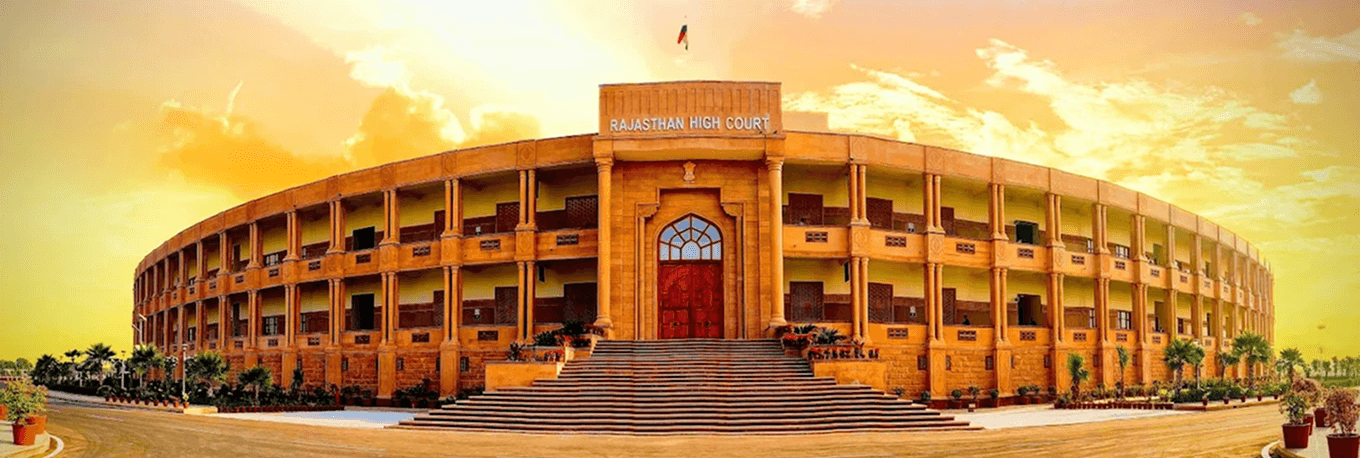
The Rajasthan Judicial Service (RJS) Examination is a highly prestigious state-level recruitment examination conducted by the High Court of Rajasthan to appoint Judicial Officers for the cadre of Civil Judge / Judicial Magistrate First Class. RJS emphasizes bare act command, practical judgment writing, state-specific local statutes, language proficiency, and familiarity with regional legal culture.

Crucial Syllabus Focus: New Sanhitas, Local Statutes & Language Weightage

  • Transition to New Criminal Laws: Candidates are evaluated on the newly enacted criminal codes (Bharatiya Nyaya Sanhita - BNS, Bharatiya Nagarik Suraksha Sanhita - BNSS, and Bharatiya Sakshya Adhiniyam - BSA) along with transitional mapping to legacy codes (IPC, CrPC, Indian Evidence Act).
  • Local Statutes & General Rules*:* Heavy scoring emphasis is placed on Rajasthan-specific legislation, including the Rajasthan Rent Control Act 2001, Rajasthan Excise Act 1950, Rajasthan Court Fees and Suits Valuation Act 1961, Rajasthan Land Revenue Act 1956, and General Rules (Civil & Criminal).
  • Direct Merit Weightage for Language Papers*:* Mains Language Papers (Hindi Essay & English Essay) account for 100 out of 300 marks (33.3%) and directly add to your final selection rank, rather than serving as mere qualifying tests.
  • Zero Negative Marking in Prelims*:* Unlike most state judicial exams, RJS Prelims carries no negative marking, encouraging candidates to maintain a 100% attempt strategy.
  • Rajasthani Dialects & Customs in Viva-Voce*:* Specific marks in the interview are evaluated on proficiency in local dialects (Marwari, Mewari, Dhundhari, Hadauti) and understanding of local social customs.

Key RJS Examination Snapshot

FeatureDetails
Exam Stages3 Stages: Prelims (100 marks) → Mains (300 marks) → Viva-Voce (35 marks)
Prelims StructureSingle objective OMR paper (100 MCQs | 2 Hours | No Negative Marking)
Prelims Weightage70% Law Subjects + 30% Language Proficiency (15% Hindi + 15% English)
Qualifying Cutoffs45% (General/OBC/EWS) and 40% (SC/ST/PwD) mandatory minimum in Prelims to qualify for Mains shortlisting (~15x vacancies)
Mains Structure4 Written Descriptive Papers:
Law Paper I (Civil - 100m),
Law Paper II (Criminal - 100m),
Language Paper I (Hindi Essay - 50m),
Language Paper II (English Essay - 50m)
Final Merit ListCalculated out of 335 marks (Mains 300 + Viva-Voce 35)

Rajasthan Judiciary 2026 - Upcoming Dates

Detailed NotificationTo Be Announced
Online Application BeginsTo Be Announced
Last Date to ApplyTo Be Announced
Prelims Admit CardTo Be Announced
Prelims Exam Date 2026To Be Announced
Prelims ResultTo Be Announced
Mains Admit CardTo Be Announced
Mains Exam Date 2026To Be Announced
Mains ResultTo Be Announced
Interview ScheduleTo Be Announced
Final ResultTo Be Announced

Selection processPrelims → Mains → Interview
Mode of examOffline
Application modeOnline
Exam languagesEnglish, Hindi
Exam locationRajasthan
Official websitehttps://hcraj.nic.in/hcraj/
Apply onlinehttps://hcraj.nic.in/hcraj/

Vacancies

To be Announced

Salary & perks

The starting basic pay for a Rajasthan Judicial Services (RJS) Civil Judge (Junior Division) is ₹77,840 per month, with a total in-hand monthly salary ranging between ₹90,000 and ₹1,10,000 after adding dearness and other allowances as per the Second National Judicial Pay Commission (2nd NJPC) recommendations.

Career Pay Progression

CadreStagePay Scale
Junior Civil JudgeEntry Level77,840 - 1,36,520
1st ACP (After 5 years of service)92,960 - 1,36,520
2nd ACP (After another 5 years)1,11,000 - 1,63,030
Senior Civil JudgeEntry Level (On Promotion)1,11,000 - 1,63,030
1st ACP (After 5 years in cadre)1,22,700 - 1,80,200
2nd ACP (After another 5 years)1,44,840 - 1,94,660
District JudgeEntry Level (On Promotion/Direct)1,44,840 - 1,94,660
Selection Grade (After 5 years in cadre)1,63,030 - 2,19,090
Super Time Scale (3 years after Selection Grade)1,99,100 - 2,24,100

Allowances and Perks

  • Housing: Free or subsidized official accommodation (bungalow or flat) or HRA. This is up to 24% of your basic pay in Class Y cities like Jaipur and Jodhpur
  • Utilities: Free or reimbursed electricity, water, and telephone allowances.
  • Travel & Support: Official vehicle/transport facilities along with fuel quotas and domestic help/peon allowances.
  • Medical: Comprehensive medical coverage for the officer and dependents, You receive a fixed ₹3,000 per month alongside full reimbursement for medical expenses incurred by you or your dependents
  • Retirement Protection: Lifetime security via regular pension payouts, gratuity caps, and accumulated provident funds.
  • Leave Travel Concession (LTC): Provides state-sponsored travel allowances for home visits or family vacations across India.

Exam pattern

The Rajasthan Judicial Service (RJS) examination has three successive stages: the Preliminary Examination, the Mains Examination, and Interview.

Stage 1: Preliminary Exam (Objective Type)

  1. The Prelims exam will be OMR Based and will consist of multiple-choice questions.
  2. 1 mark will be awarded for every correct answer and have NO negative marks for wrong/multiple answers.
  3. Total time allotted is 2 hours for full paper.
  4. The language of the question paper of the Prelims Exam will be in English and Hindi.
  5. The qualifying marks is 45% for General/OBC/EWS and 40% for SC/ST in the Prelims. Actual cut-off varies yearly and depends on the paper difficulty and application score.
ComponentPaperSubjects CoveredMaximum Marks
Law SegmentPaper 1 - Civil LawCode of Civil Procedure, Constitution of India, Indian Contract Act, Limitation Act, Specific Relief Act, Transfer of Property Act, Rajasthan Rent Control Act, Interpretation of Statutes etc.35 Marks
Paper 2 - Criminal LawCode of Criminal Procedure, Indian Penal Code, Indian Evidence Act, Juvenile Justice Act, Negotiable Instruments Act (Ch. XVII), Probation of Offenders Act, Protection of Women from Domestic Violence Act, Indecent Representation of Women Act, POSCO Act, Sexual Harassment of Women at Workplace Act etc.35 Marks
Language SegmentHindi Proficiencyसंधि, समास, उपसर्ग, प्रत्यय, तत्सम/तद्भव, विलोम, पर्यायवाची, शब्द/वाक्य शुद्धि, मुहावरे, लोकोक्तियाँ, पारिभाषिक शब्दावली।15 Marks
English ProficiencyTenses, Articles, Determiners, Active/Passive Voice, Direct/Indirect Speech, Phrasal Verbs, Idioms, Synonyms, Antonyms, Modals.15 Marks


Stage 2: Main Examination

​Candidates shortlisted from the Prelims advance to the Main Examination. Performance in this written phase serves as the fundamental criteria for preparing the final selection merit list.

  • Exam Format: Descriptive written papers.
  • Qualifying Benchmarks
    CategoryMarks
    General/EWS/OBC35% marks in each individual paper & 40% marks in the aggregate across all four papers
    Reserved (SC/ST/PwD)30% marks in each individual paper & 35% marks in the aggregate across all four papers
  • Language: Candidates can choose to write answers in English or Hindi.

Exam pattern and marks distribution

PaperSubjects coveredCore ComponentsTotal MarksDuration
Paper 1Civil Law• The Constitution of India
• Code of Civil Procedure, 1908 (CPC)
• The Indian Contract Act, 1872
• The Transfer of Property Act, 1882
• The Specific Relief Act, 1963
• The Limitation Act, 1963
• The Rajasthan Rent Control Act, 2001
• Interpretation of Statutes
100 Marks3 Hours
Paper 2Criminal Law• The Bharatiya Nyaya Sanhita, 2023 (BNS)
• The Bharatiya Nagarik Suraksha Sanhita, 2023 (BNSS)
• The Bharatiya Sakshya Adhiniyam, 2023 (BSA)
• The Juvenile Justice (Care and Protection of Children) Act, 2015
• The Probation of Offenders Act, 1958
• The Negotiable Instruments Act, 1881
• Special Acts Protecting Women & Children
100 Marks3 Hours
Paper 3Language Hindi Essay• Legal Themes (विधिक विषय)
• Socio-Economic & Contemporary Issues (सामाजिक एवं आर्थिक मुद्दे)
• Rajasthan Culture & Heritage (राजस्थान की संस्कृति एवं विरासत)
50 Marks2 Hours
Paper 4Language: English Essay• Socio-Legal Developments
• Landmark Judgments
• Current National Issues
50 Marks2 Hours


Stage 3: Interview

  • Marks: 35 marks.
  • Qualifying Marks: No minimum qualifying passing marks required
  • Focus: Legal knowledge, General Awareness, Personality Test, Rajasthani Dialects & Social Customs​

Syllabus

Preliminary Examination Syllabus

This 2-hour, objective-type paper with no negative marking penalty. It evaluates candidates on:

Law Paper (I) - Civil Law

  1. Code of Civil Procedure, 1908
  2. The Constitution of IndiaIndian Contract Act, 1872
  3. The Bhartiya Sakshya Adhiniyam, 2023
  4. The Indian Evidence Act, 1872
  5. The Limitation Act, 1963
  6. The Specific Relief Act, 1963
  7. The Transfer of Property Act, 1882
  8. Interpretation of Statutes
  9. The Rajasthan Rent Control Act, 2001
  10. Hindu Laws (i.e. Hindu Marriage Act, 1955, Hindu Adoption & Maintenance Act, 1956, Hindu Succession Act, 1956, Hindu Minority & Guardianship Act, 1956)
  11. Rajasthan Court Fees & Suits Valuation Act, 1961
  12. The Rajasthan Land Revenue Act, 1956
  13. Partnership Act, 1932
  14. The Sale of Goods Act, 1930
  15. The Registration Act, 1908
  16. Mohammaden Law (relating to Succession, Marriage, Divorce, Maintenance & Adoption)

Law Paper (II) - Criminal Law

  1. The Bhartiya Nagrik Suraksha Sanhita, 2023
  2. The Code of Criminal Procedure, 1973
  3. The Bhartiya Sakshya Adhiniyam, 2023
  4. The Indian Evidence Act, 1872
  5. The Bhartiya Nyaya Sanhita, 2023
  6. The Indian Penal Code, 1860
  7. The Juvenile Justice (Care and Protection of Children) Act, 2015
  8. The Negotiable Instruments Act, 1881
  9. The Probation of Offenders Act, 1958
  10. Protection of Women from Domestic Violence Act, 2005
  11. The Indecent Representation of Women (Prohibition) Act, 1986
  12. The Protection of Children from Sexual Offences Act, 2012
  13. The Sexual Harassment of Women at Workplace (Prevention, Prohibition and Redressal) Act, 2013
  14. Rajasthan Excise Act, 1950
  15. The Information Technology Act, 2000
  16. Framing of Charge / Judgment Writing

Hindi Proficiency

  1. शब्द रचना: सन्धि एवं सन्धि विच्छेद, समास, उपसर्ग, प्रत्यय।
  2. शब्द प्रकार:
    • (क) तत्सम, अर्द्धतत्सम, तद्भव, देशज, विदेशी।
    • (ख) संज्ञा, सर्वनाम, विशेषण, क्रिया, अव्यय (क्रिया विशेषण, सम्बन्ध सूचक, विस्मयबोधक निपात)।
  3. शब्द ज्ञान: पर्यायवाची, विलोम, शब्द युग्मों का अर्थ भेद, वाक्यांश के लिए सार्थक शब्द, समश्रुत भिन्नार्थक शब्द, समानार्थी शब्दों का विवेक, उपयुक्त शब्द चयन, सम्बन्धवाची शब्दावली।
  4. शब्द शुद्धि।
  5. व्याकरणिक कोटियाँ: परसर्ग, लिंग, वचन, पुरुष, काल, वृत्ति (Mood), पक्ष (Aspect), वाच्य (Voice)।
  6. वाक्य रचना।
  7. वाक्य शुद्धि।
  8. विराम चिन्हों का प्रयोग।
  9. मुहावरे / लोकोक्तियाँ।
  10. पारिभाषिक शब्दावली: प्रशासनिक, विधिक (विशेषतः)।

English Proficiency

  1. Tenses
  2. Articles and Determiners
  3. Phrasal Verbs and Idioms
  4. Active & Passive Voice
  5. Co-ordination & Subordination
  6. Direct and Indirect Speech
  7. Modals expressing various concepts (Obligation, Request, Permission, Prohibition, Intention, Condition, Probability, Possibility, Purpose, Reason, Companions, Contrast)
  8. Antonyms and Synonyms


Main Examination Syllabus

The Rajasthan Judicial Service (RJS) Mains Examination is a descriptive, subjective-type written test comprising four papers totaling 300 marks.

Law Paper I (Civil Law): 100 Marks | 3 Hours

  1. Code of Civil Procedure, 1908
  2. The Constitution of IndiaIndian Contract Act, 1872
  3. The Bhartiya Sakshya Adhiniyam, 2023
  4. The Indian Evidence Act, 1872
  5. The Limitation Act, 1963
  6. The Specific Relief Act, 1963
  7. The Transfer of Property Act, 1882
  8. Interpretation of Statutes
  9. The Rajasthan Rent Control Act, 2001
  10. Hindu Laws (i.e. Hindu Marriage Act, 1955, Hindu Adoption & Maintenance Act, 1956, Hindu Succession Act, 1956, Hindu Minority & Guardianship Act, 1956)
  11. Rajasthan Court Fees & Suits Valuation Act, 1961
  12. The Rajasthan Land Revenue Act, 1956
  13. Partnership Act, 1932
  14. The Sale of Goods Act, 1930
  15. The Registration Act, 1908
  16. Mohammaden Law (relating to Succession, Marriage, Divorce, Maintenance & Adoption)
  17. Order / Judgment Writing

Law Paper II (Criminal Law): 100 Marks | 3 Hours

  1. The Bhartiya Nagrik Suraksha Sanhita, 2023
  2. The Code of Criminal Procedure, 1973
  3. The Bhartiya Sakshya Adhiniyam, 2023
  4. The Indian Evidence Act, 1872
  5. The Bhartiya Nyaya Sanhita, 2023
  6. The Indian Penal Code, 1860
  7. The Juvenile Justice (Care and Protection of Children) Act, 2015
  8. The Negotiable Instruments Act, 1881
  9. The Probation of Offenders Act, 1958
  10. Protection of Women from Domestic Violence Act, 2005
  11. The Indecent Representation of Women (Prohibition) Act, 1986
  12. The Protection of Children from Sexual Offences Act, 2012
  13. The Sexual Harassment of Women at Workplace (Prevention, Prohibition and Redressal) Act, 2013
  14. Rajasthan Excise Act, 1950
  15. The Information Technology Act, 2000
  16. Framing of Charge / Judgment Writing

Language Paper I (Hindi Essay): 50 Marks | 2 Hours

Essay writing on topics such as legal themes, socio-economic issues, current events, and Rajasthani culture

Language Paper II (English Essay): 50 Marks | 2 Hours

Essay writing targeted at checking grammar, vocabulary, expression, and command over contemporary legal/general themes

Eligibility

Educational Qualifications

Applicants targeting the Rajasthan civil judge position need to satisfy the following academic and cultural requirements:

  • Law Degree: Must hold a Bachelor of Laws (Professional) degree from a university recognized by the Bar Council of India. Final year/semester students may apply provisionally, provided they present proof of passing before the Mains examination. The law degree can be of 3 year or 5 year integrated course.
  • Experience: No prior practice or work experience as an advocate is required.
  • Character & Health: You must possess a good moral character and be free from any disqualifying criminal misconduct or medical conditions.​

Nationality

Must be a citizen of India.

Language Proficiency

Must be proficient in Hindi (Devnagari script) and Rajasthani dialects/customs.

Age Limit Requirements

Candidates looking to apply must fall within the official age range specified below:

  • Maximum Age: You must not be more than 40 years old (General Category)
  • Minimum Age: ​Minimum age is 21 years

Permissible Age Relaxations

Upper age limit relaxations apply to various reserved categories:

CategoryUpper Age Limit
General (Unreserved) Male40 years
General (Unreserved) Female45 years
SC / ST / OBC / MBC / EWS (Male)45 years
SC / ST / OBC / MBC / EWS (Female)50 years
Persons with Disabilities (PwD) - General45 years
Persons with Disabilities (PwD) - Reserved50 years
Ex-Servicemen50 years

​​

Application fee

CategoryApplication Fee
General / OBC (Creamy Layer) / Other States₹1500/-
OBC (Non-Creamy Layer) / MBC (Non-Creamy Layer) / EWS (Rajasthan)₹1250/-
SC / ST / Ex-Servicemen (Rajasthan)₹800/-
Persons with Benchmark Disabilities (PwD):Nil

Form Correction: Once you pay the fee and submit the application, the form is locked and can not be changed (Subject to specific correction window if notified by Rajasthan High court)

How to prepare

The Rajasthan High Court conducts RJS in three stages: Preliminary Examination, Main Examination, and Interview. Your final rank is decided by only 335 marks (Mains 300 plus Interview 35). Prelims marks are not counted.

Three things make RJS different from other state exams: 1. there is no negative marking in Prelims, 2. the language papers add to your score instead of just qualifying you, and 3. the interview gives marks for Rajasthani dialect and local customs.

Step 1: Attempt all 100 questions in Prelims

The Prelims is an OMR based objective paper of 100 questions and 100 marks in 2 hours, with no negative marking.

  • Since a blank answer and a wrong answer both give you zero, there is no reason to leave any question unattempted. Practise a full 100 attempt rate with smart elimination.
  • Weightage is fixed at 70 percent law (same subjects as Mains Law Paper I and II) and 30 percent language (15 percent Hindi, 15 percent English).
  • You need 45 percent to qualify (40 percent for SC, ST, PwD and Ex-Servicemen). About 15 times the vacancies are shortlisted category wise.
  • The paper is set in both Hindi and English, so answer in the language you read faster in.

Step 2: Master Rajasthan local statutes

RJS lists more state specific Acts than any other judiciary exam, and this is where the exam is won.

  • Civil side: Rajasthan Rent Control Act 2001, Rajasthan Tenancy Act 1955, Rajasthan Land Revenue Act 1956, Rajasthan Stamp Act 1998, Rajasthan Court Fees and Suits Valuation Act 1961, Rajasthan Municipalities Act 2009 (only the prescribed chapters), Rajasthan Panchayati Raj Act 1994, and General Rules (Civil) 1986.
  • Criminal side: Rajasthan Excise Act 1950 and General Rules (Criminal) 1980.
  • The Rent Control Act, Tenancy Act and Land Revenue Act give far more questions than their length suggests. Study them as core subjects, not as last week revision.

Step 3: Score in the Hindi and English essay papers

These two papers carry 100 of the 300 Mains marks and are counted in the final merit.

  • Language Paper I is Hindi Essay, 50 marks, 2 hours. Language Paper II is English Essay, 50 marks, 2 hours.
  • These are essay papers, not grammar tests, so clear structure and clean expression matter more than vocabulary.
  • Write one full essay in each language every week. Pick themes from law and society, constitutional developments, and Rajasthan issues.
  • Losing 25 to 30 marks here out of a total of 335 is enough to end your attempt.

Step 4: Practise judgment writing, framing issues and framing charges

Both law papers test practical court work, not just theory.

  • Law Paper I (Civil), 100 marks, 3 hours: CPC, Contract Act, Evidence Act, Specific Relief Act, Transfer of Property Act, Limitation Act, Registration Act, Partnership Act, Sale of Goods Act, Constitution, Hindu and Muslim personal laws, plus the Rajasthan Acts above, with drafting, pleadings, framing of issues and writing civil judgments.
  • Law Paper II (Criminal), 100 marks, 3 hours: IPC and BNS, CrPC and BNSS, Evidence Act and BSA, Negotiable Instruments Act, Juvenile Justice Act, Probation of Offenders Act, POCSO, Domestic Violence Act and Rajasthan Excise Act, with framing of charges and writing criminal judgments.
  • Know both criminal law regimes, old and new, since comparison questions are now common.
  • Solve one full fact pattern to judgment exercise every week under a clock. Use Lawpatra's RJS mock series and judgment writing evaluation to fix your format first, then your content.
  • To reach the Interview you need 35 percent in each law paper and 40 percent in aggregate (30 percent and 35 percent for SC, ST, PwD and Ex-Servicemen). One weak paper ends the attempt.

Step 5: Prepare for the 35 mark interview

The Interview is worth about 10 percent of your final merit and has one requirement unique to Rajasthan.

  • Questions may be general rather than legal, covering your academic record, personality, current affairs and present day problems.
  • Marks are given for proficiency in Rajasthani dialects and knowledge of the social customs of Rajasthan. If you are not from the state, build working familiarity with Marwari, Mewari, Dhundhari and Hadauti usage.
  • Final selection needs a minimum aggregate of 40 percent in Mains and Interview together (35 percent for Ex-Servicemen).

Two things to check before publishing:

  1. Age limit. Recent cycles used 21 to 40 years with category relaxations, but Rajasthan has revised this more than once. Confirm on hcraj.nic.in.
  2. The prescribed chapters of the Rajasthan Municipalities Act 2009 and the exact list of special criminal Acts in Law Paper II change slightly between notifications.

FAQs

Q: What is the overall selection process for RJS?
A: The Rajasthan High Court conducts the exam in three stages:

  1. Preliminary Examination: Objective type, 100 questions, 100 marks, 2 hours.
  2. Main Examination: Descriptive type, four papers, 300 marks in total.
  3. Interview (Viva Voce): 35 marks.

Q: How is the final merit list prepared?
A: Final merit is based on 335 marks, that is Mains (300) plus Interview (35). Preliminary Examination marks are only for screening and are not added to the final score.

Q: Is there negative marking in the RJS Prelims?
A: No. There is no deduction for wrong answers in the Preliminary Examination. Each correct answer carries 1 mark. Since a blank answer and a wrong answer both score zero, candidates should attempt all 100 questions.

Q: What is the subject weightage in Prelims?
A: 70 percent weightage goes to law subjects, which are the same subjects prescribed for Mains Law Paper I and Law Paper II. The remaining 30 percent tests language proficiency, split as 15 percent Hindi and 15 percent English.

Q: What are the qualifying marks in Prelims?
A: 45 percent for general category candidates and 40 percent for SC, ST, PwD and Ex-Servicemen candidates. Around 15 times the number of vacancies is shortlisted category wise for the Mains examination.

Q: In which language is the question paper set?
A: The Preliminary Examination paper is set in both Hindi and English, so candidates may attempt it in whichever language they are more comfortable with.

Q: What is the structure of the Main Examination?
A: Four papers totalling 300 marks:

  • Law Paper I (Civil Law): 100 marks, 3 hours. Covers CPC, Contract Act, Evidence Act, Specific Relief Act, Transfer of Property Act, Limitation Act, Registration Act, Partnership Act, Sale of Goods Act, Constitution, Hindu and Muslim personal laws, and Rajasthan civil statutes. Includes drafting, pleadings, framing of issues and writing civil judgments.
  • Law Paper II (Criminal Law): 100 marks, 3 hours. Covers IPC and BNS, CrPC and BNSS, Evidence Act and BSA, Negotiable Instruments Act, Juvenile Justice Act, Probation of Offenders Act, POCSO, Domestic Violence Act and the Rajasthan Excise Act. Includes framing of charges and writing criminal judgments.
  • Language Paper I (Hindi Essay): 50 marks, 2 hours.
  • Language Paper II (English Essay): 50 marks, 2 hours.

Q: Are the language papers only qualifying, or do they count?
A: They count. The Hindi and English essay papers together carry 100 of the 300 Mains marks and are added to the final merit. This is a key difference from several other state judiciary exams where language is only a qualifying test.

Q: What are the qualifying marks in Mains?
A: To be called for the Interview, a candidate must score at least 35 percent in each law paper and 40 percent in aggregate. For SC, ST, PwD and Ex-Servicemen candidates the requirement is 30 percent in each law paper and 35 percent in aggregate. Failing one law paper ends the attempt regardless of the total.

Q: Which Rajasthan specific laws are included in the syllabus?
A: On the civil side, the Rajasthan Rent Control Act 2001, Rajasthan Tenancy Act 1955, Rajasthan Land Revenue Act 1956, Rajasthan Stamp Act 1998, Rajasthan Court Fees and Suits Valuation Act 1961, Rajasthan Municipalities Act 2009 (prescribed chapters only), and General Rules (Civil) 1986. On the criminal side, the Rajasthan Excise Act 1950 and General Rules (Criminal) 1980.

Q: Does the syllabus include the new criminal laws?
A: Yes. Candidates are expected to know the Bharatiya Nyaya Sanhita 2023, the Bharatiya Nagarik Suraksha Sanhita 2023 and the Bharatiya Sakshya Adhiniyam 2023 alongside the IPC, CrPC and Indian Evidence Act. Comparison and provision mapping questions are now common during this transition period.

Q: What is asked in the Interview?
A: The Interview carries 35 marks. Questions may be general rather than legal and cover the candidate's academic record, character, personality, current affairs and present day problems. Marks are also given for proficiency in Rajasthani dialects and knowledge of the social customs of Rajasthan. For final selection, a candidate must secure a minimum aggregate of 40 percent in the Mains and Interview taken together, and 35 percent for Ex-Servicemen.

Q: What is the educational qualification required?
A: A Bachelor of Laws (Professional) degree from a university established by law in India and recognised under the Advocates Act 1961. No minimum years of practice are required, so fresh law graduates can apply.

Q: What is the age limit?
A: Recent notifications have set the range at 21 to 40 years, with relaxations for reserved categories. Rajasthan has revised this limit more than once, so confirm the exact figure and cut off date against the current notification on hcraj.nic.in.

Q: How many attempts are allowed?
A: There is no limit on the number of attempts. Candidates can apply as long as they are within the prescribed age limit.

Q: What is the pay scale for a newly appointed Civil Judge in Rajasthan?
A: Appointment is to the post of Civil Judge (Junior Division) under the Second National Judicial Pay Commission framework.

  • Pay Scale: 77,840 to 1,36,520 rupees
  • Starting Basic Pay: 77,840 rupees per month
  • Estimated in hand salary: around 90,000 to 95,000 rupees per month with DA, HRA and other admissible allowances

Actual in hand pay varies by posting city, so check the allowance rates applicable to your station.

Why choose us?

Everything You Need to Crack RJS

A complete preparation ecosystem powered by AI and designed for success.

Unlimited Practice Papers

Practice high quality questions spread across every topic. Curated by expert educators. Comes with detailed explanation and real life examples.

24/7 AI Tutor

Get instant doubt resolution, AI-led practice sessions, and confidence tracking. Build exam readiness with personalized guidance anytime, anywhere.

Smart Flashcards

Master concepts with spaced repetition. AI-generated flashcards in English & Hindi.

0+ Mock Tests

Full-length mock tests and topic-wise practice sets with detailed analysis.

Live Leaderboard

Compete with 1227 aspirants. See your All India Rank in real-time.

Deep Analytics

Track accuracy trends, study streaks, and weak topics with visualizations.

Community

Learn from peers. Ask questions and discuss topics with fellow aspirants.

Multi-language

Study in your preferred language. Content available in English & Hindi.

Complete Coverage

22 Subjects Covered

Master every section of the RJS exam with our meticulously designed curriculum.

Bharatiya Nyaya Sanhita, 2023 (BNS)

6
Topics
200+
Questions
8
Tests
48
Flashcards

Bharatiya Nagarik Suraksha Sanhita, 2023 (BNSS)

5
Topics
150+
Questions
6
Tests
47
Flashcards

Bharatiya Sakshya Adhiniyam, 2023 (BSA)

5
Topics
160+
Questions
7
Tests
49
Flashcards

Code of Civil Procedure, 1908 (CPC)

6
Topics
190+
Questions
8
Tests
49
Flashcards

Contract Act, 1872

5
Topics
160+
Questions
7
Tests
48
Flashcards

Specific Relief Act, 1963

4
Topics
120+
Questions
5
Tests
49
Flashcards

Transfer of Property Act, 1882

5
Topics
170+
Questions
7
Tests
47
Flashcards

Hindu Law

5
Topics
160+
Questions
7
Tests
46
Flashcards

Muslim Personal Law

5
Topics
170+
Questions
7
Tests
48
Flashcards

Limitation Act, 1963

3
Topics
80+
Questions
4
Tests
48
Flashcards

Constitution of India

5
Topics
160+
Questions
7
Tests
49
Flashcards

Rajasthan Rent Control Act, 2001

4
Topics
130+
Questions
5
Tests
48
Flashcards

Rajasthan Land Revenue Act, 1956

4
Topics
110+
Questions
5
Tests
49
Flashcards

Rajasthan Tenancy Act, 1955

4
Topics
130+
Questions
6
Tests
50
Flashcards

Rajasthan Civil Courts Ordinance, 1950

4
Topics
130+
Questions
5
Tests
48
Flashcards

Negotiable Instruments Act, 1881

4
Topics
130+
Questions
5
Tests
37
Flashcards

Registration Act, 1908

3
Topics
100+
Questions
4
Tests
50
Flashcards

Rajasthan Court Fees and Suits Valuation Act

3
Topics
100+
Questions
4
Tests
46
Flashcards

Legal Ethics and Professional Conduct

4
Topics
120+
Questions
5
Tests
49
Flashcards

Interpretation of Statutes

3
Topics
100+
Questions
4
Tests
48
Flashcards

Hindi Language Proficiency

5
Topics
150+
Questions
6
Tests
50
Flashcards

English Language Proficiency

5
Topics
150+
Questions
6
Tests
49
Flashcards
Powered by AI

Your Personal AI Tutor, Available 24/7

Everything you need to stay ahead of the competition

Latest Exam Pattern

Learn what others don't know yet

Personalized Explanations

Your way, not textbook style

Unlimited Practice

Generate questions on demand

Adaptive Learning

AI targets your weak spots

Smart Revision

AI-curated quick summaries

Confidence Score

Know when you're exam-ready

Daily & Weekly Plans

Schedules that actually work

24/7 Availability

Study anytime, anywhere

Join 1,227 students already using AI Tutor

Ready to crack Rajasthan Judiciary Service?

Adaptive practice, an AI tutor that explains every mistake, and mocks that mirror the real exam. Free to start — no card required.

Start practicing free